A Beautiful Capital J Monogram for Elegant Projects
When a new embroidery file lands in my library, I always think about the stitch before I think about the sale. How will it actually look on fabric? Will it hold its charm after a dozen washes? Does it feel like a design clients will want to wear or display? That’s the lens I’m using today to look at the Beautiful Capital J Letter Monogram. This isn’t just a digital asset; it’s a potential centerpiece for real, stitched work.
First Impressions: Where Elegance Meets Practicality
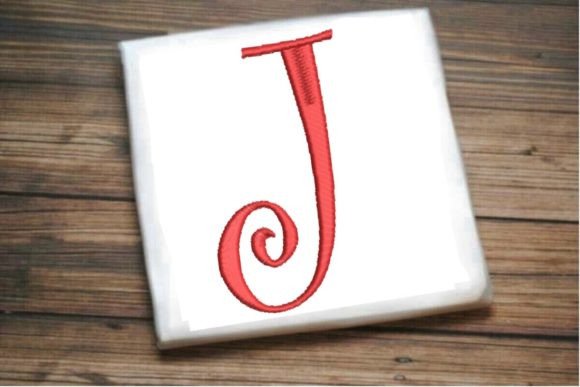
Right away, this monogram strikes a balance. It’s sophisticated without being overly ornate, which is a sweet spot for many projects. The ‘J’ itself has a classic, flowing shape that suggests a timeless quality. The mood it creates is one of personalized elegance—it’s not flashy, but it’s definitely special. This level of detail feels intentional; it’s detailed enough to be interesting, but not so dense that it becomes a stitching challenge on common fabrics. Its visual personality leans towards giftable, boutique-ready items rather than loud, graphic statements.
I can immediately picture this monogram belonging to a certain family of projects. Think of a beautifully embroidered pillow cover for a nursery, a tea towel in a kitchen set, or the focal point on a lightweight summer tote bag. It feels naturally suited to items where the embroidery is a considered, personal touch, not just decoration.
A Real-Life Scenario: The Custom Tote Bag Order
Let’s walk through a typical scenario. A client orders a custom tote bag as a gift, requesting an embroidered monogram for the recipient, ‘Julia’. I’m considering this Beautiful Capital J design. My first thought is scale. On a tote bag’s flat panel, this design would need to be sized to command attention without overwhelming the fabric. Its elegant lines would translate well into satin stitch areas, creating a lovely, smooth sheen. I’d be thinking about thread color contrast—a deep navy on a natural canvas, or perhaps a soft gold on a dark denim. The design’s sophistication would elevate the entire product, making it feel less like a generic bag and more like a bespoke, handmade product. That directly impacts perceived value and, crucially, customer trust in my craftsmanship.
Performance Across Projects: From Baby Clothes to Boutique Brands
This monogram’s flexibility is one of its strongest features. For baby embroidery items, like a blanket corner or a sweater, its gentle curves are perfect. It avoids any harsh, geometric edges that might feel too severe for a soft item. For custom apparel like sweatshirts or t-shirts, it offers a clean, recognizable mark that doesn’t look like a corporate logo—it feels personal. As an embroidered patch, it would hold up well, with defined borders that could be neatly finished.
For the craft business owner or Etsy seller, this design is a reliable asset. It can anchor a whole line of personalized gifts—from aprons to pillow covers. It provides strong brand consistency if you’re offering monogramming services; every ‘J’ you stitch will carry the same elegant signature. In digital product previews and printable mockups, its clear shape makes it easy for customers to visualize on their chosen item, boosting buyer engagement.
Where Caution is Needed: Stitching with Care
While versatile, any design has its considerations. The Beautiful Capital J Monogram, with its presumably smooth curves and details, requires a mindful approach on certain surfaces. On stretchy fabric like a standard t-shirt, using the correct stabilizer is paramount to prevent distortion of those elegant lines. On dark fabric, careful thread color selection is key—some shades of the design might get lost if the contrast isn’t high enough.
I would be cautious about stitching it very small on textured fabrics like some sweater knits, as fine details might get lost in the weave. Similarly, on a curved surface like a cap, the layout needs to be tested to ensure the entire design sits comfortably on the crown without awkward distortion at the edges. For products destined for frequent washing, like kitchen towels, I’d want to test the stitch density. Areas of high fill stitch density can sometimes feel stiff; a balanced density ensures the design remains both beautiful and durable.
The Designer’s Notes: Practical Steps Before Hooping
Before committing this to a client’s project or my own shop merchandise, my process is straightforward but essential. First, I always test the design on scrap fabric first. I use the same material I plan for the final product—be it cotton canvas for a tote or jersey for a sweatshirt. This reveals everything: how the satin stitches lay, whether small corners stitch out cleanly, and how the overall stitch clarity appears.
I check thread color contrast by stitching a sample on both light and dark backgrounds. Sometimes a design that pops on white barely registers on black. I review the stitch density by feel; the embroidered piece should be supple, not board-like. I also confirm the effective hoop size for my machine—a design might be technically small, but if it has wide swings, it might require a larger hoop to stitch cleanly.
For commercial embroidery projects or selling finished items, I absolutely confirm the licensing of the embroidery file. This is a non-negotiable step for any professional or small business owner. Understanding whether it’s licensed for personal use only, or for commercial end products, protects your business and respects the designer’s work.
Finally, I consider presentation. How does this Beautiful Capital J look in a simple black-and-white mockup? That tells me a lot about its fundamental shape and appeal, stripped of color. All these steps transform a digital file from a potential into a proven, reliable part of my embroidery toolkit.
The Final Stitch: Adding Value Beyond the Thread
At its core, a design like this is more than stitches. When executed well on a handmade product, it enhances professionalism and giftability. A monogrammed tea towel feels like a thoughtful holiday gift. A sweatshirt with a clean, elegant ‘J’ feels boutique-level. For the maker, it becomes a trustworthy, repeatable element that customers recognize and request. It’s a building block for a craft business, capable of scaling from a one-off baby blanket to a small line of personalized aprons for a local shop.
The Beautiful Capital J Letter Monogram, from a practical designer’s viewpoint, is a strong contender. Its elegance is its main feature, but its real test is on the fabric. With careful testing and application on the right projects, it has the potential to stitch out beautifully, satisfy clients, and add that touch of personalized sophistication that turns a simple item into a keepsake.